
Dr. Wilson is a pediatrician who gained experience working in the Air Force and during his residency at the University of Oklahoma.
“Don’t let the fear of ticks keep you from enjoying Utah’s incredible outdoor activities. Make tick checks part of your post-outdoor routine. Checking from your scalp to your socks takes two minutes and gives you peace of mind. If you ever find a stubborn tick or spot an unusual rash, remember that Utah Valley Pediatrics is always here to help.”
– Dr. Wilson
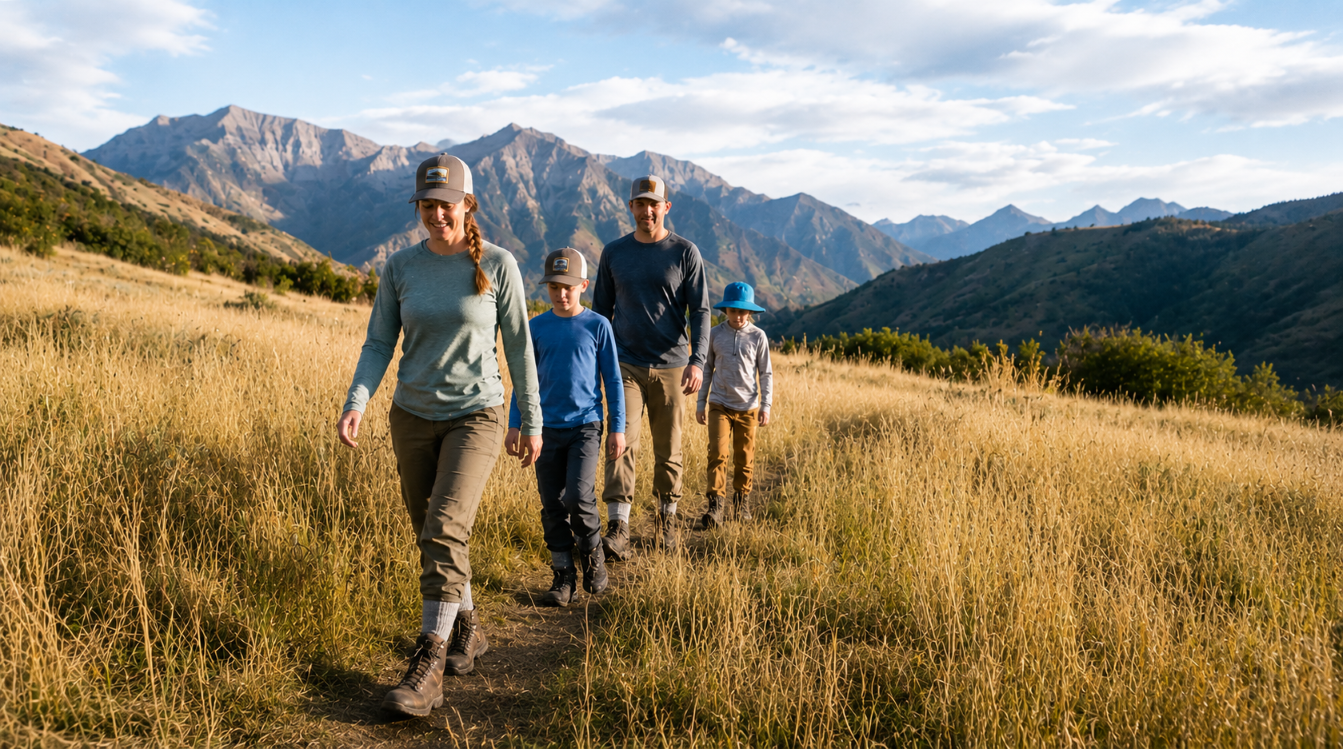
Exploring the beauty of the Wasatch Front and the Uinta Mountains is a hallmark of growing up in Utah. While our state has a lower risk for certain tick-borne illnesses than other regions, local ticks are still active in our scrub oak and tall grasses. Understanding how to prevent encounters and respond if you find a tick on your child ensures that these outdoor adventures remain safe and enjoyable.
In Utah, tick locations are highly dependent on elevation and the environment. The most common areas for encounters are the foothills and higher elevations, including the Wasatch Front and the Uinta Mountains. Ticks prefer transition zones where trails meet tall grass, mountain mahogany, or scrub oak. While less common in arid desert environments, they are still present in shady, moist microhabitats, such as riverbanks and near Gambel oak groves.
Ticks find hosts “questing”: The tick climbs to the end of tall grass or sagebrush and waits with its front legs extended. Because they sense heat and vibrations, they are ready to grab on the moment a person, pet, or piece of gear brushes against the plant. This is why walking through tall vegetation is the most likely way for a child to pick up a tick: They simply hitch a ride as you pass by.
Tick activity in Utah follows a seasonal pattern tied to temperature and moisture. Ticks become active as soon as the snow melts, with peak activity typically occurring from March through mid-July. Activity often slows down during the hottest, driest weeks of late July and August as ticks retreat to stay hydrated. However, you may see a small increase in activity during the cooler autumn months before the first freeze.
Utah is home to several species of ticks that parents should recognize, each carrying different risks:
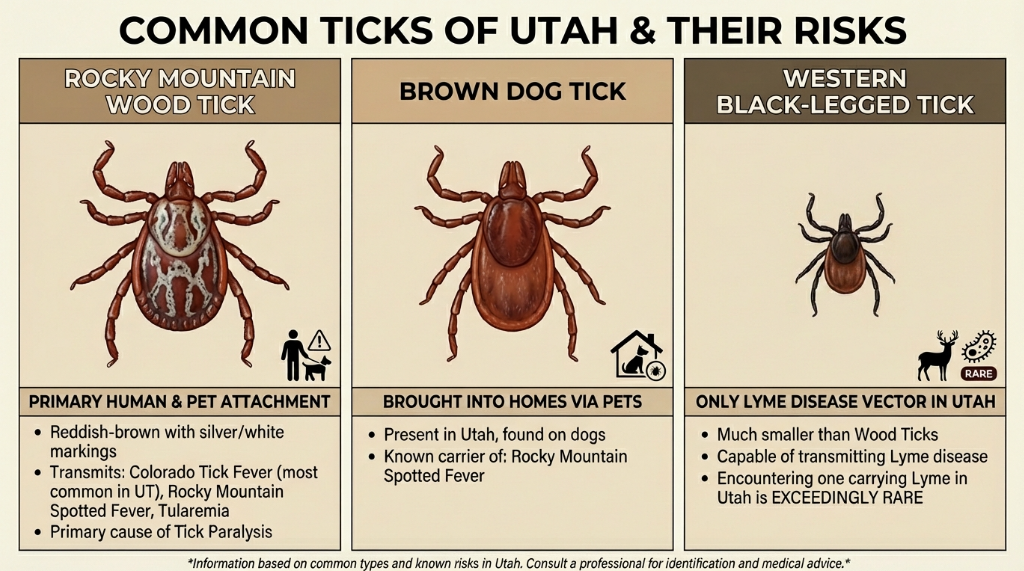
Although tick-borne diseases are scary and serious, please remember that they are very rare, especially in Utah. The following table outlines the diseases and symptoms associated with ticks found in our region:
| Disease | Type | Symptoms |
| Rocky Mountain Spotted Fever | Bacteria | Sudden onset of chills and fever, headache, bloodshot eyes, and capillary leakage |
| Tularemia | Bacteria | A skin ulcer at the bite site, accompanied by fever, chills, and swollen lymph nodes |
| Colorado Tick Fever | Virus | Sudden, intermittent fever, along with headache, muscular pain, and leukopenia (a drop in white blood cells) |
| Tick Paralysis | Neurotoxin | Paralysis spreading from the feet upward; potentially fatal if not treated (Seek medical attention immediately) |
| Tick-Borne Relapsing Fever | Bacteria | Fever, nausea, headache, and muscle and joint pain |
| Lyme Disease | Bacteria | Fever, chills, headache, fatigue, muscle and joint aches, swollen lymph nodes, and a target-shaped rash |
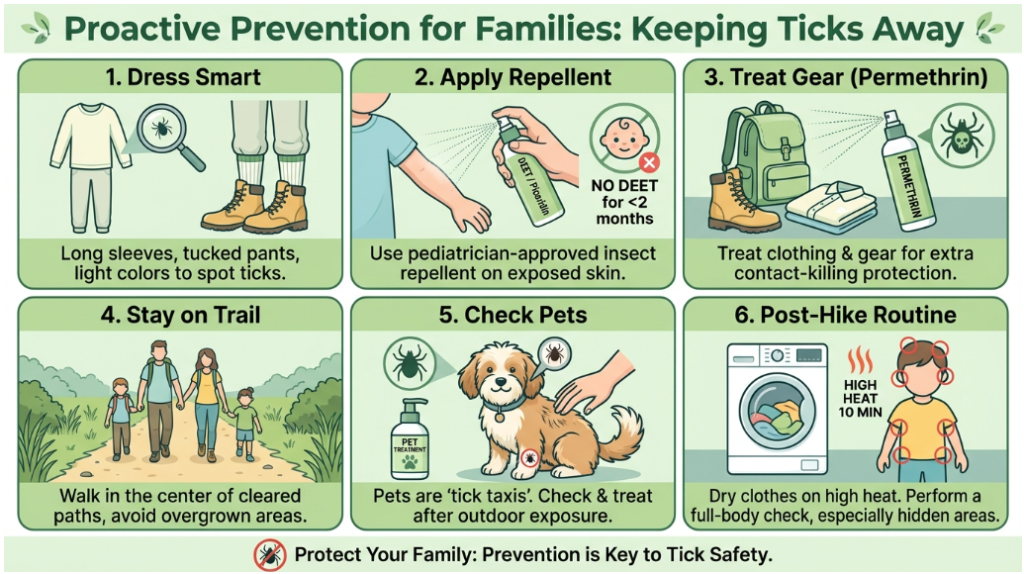
The most effective way to protect your children is to prevent ticks from hitching a ride:
If you discover a tick attached to your child, do not panic. Proper removal is straightforward and significantly reduces the risk of infection:
Video: How to Remove a Tick (CDC)
While most tick bites do not require medical intervention, parents should watch for specific symptoms of the following tick-borne illnesses:
If you notice any other concerning symptoms develop after a tick bite, see your pediatrician.
Is Lyme disease a real threat here?
Lyme disease is a threat, but a low one. While the Western black-legged tick is present in Utah, research suggests that encountering one carrying Lyme disease in our state is exceedingly rare.
Should I save the tick?
Yes. Save the tick in a sealed container with rubbing alcohol. Preserving the specimen is helpful for identification if your child develops symptoms in the following days or weeks.
What do I do if the head gets stuck?
If the head gets stuck and breaks off inside the skin, clean the area and use a sterile needle to carefully remove the fragment from the skin. If you cannot remove it easily, visit a healthcare professional. They’ll be able to clean the bite and prevent further problems.
Are there ticks in my own backyard?
Ticks can be found in any grassy or wooded area, even your backyard. Keeping grass mown short makes your yard less attractive to ticks, as they prefer the shade and moisture of taller vegetation.
How long does the tick have to be attached to spread disease?
In most cases, transmission of disease occurs 12 to 24 hours after the initial bite. Removing a tick within 24 hours significantly reduces the risk of disease transmission.
If I find a red bump but no tick, could it still be a tick bite?
Because hard ticks anchor themselves with a cement-like substance for days, you would almost always find the tick still firmly attached. While a tick could be scratched off, a mystery red bump without a tick present is likely from a different insect.
At Utah Valley Pediatrics, we are committed to helping your family stay healthy. If you have concerns about a recent tick exposure, your pediatrician is your best resource for expert guidance.



 Medicines & Dosages
 Pay Your Bill
 Surveys & Questionnaires
 Pediatric Newsletter
 Patient Portal
 Locations