
Dr. Matthew Koller tries to focus on building good habits early because he understands how little adjustments for health when a child is young can have a big impact on their long-term health.
At Utah Valley Pediatrics, we know that finding a mysterious red bump on your child can be a source of worry, especially if you think it came from a spider. While Utah is home to many arachnids, most are harmless neighbors that help control other pests.
Most spiders in our state are not aggressive and generally only bite if they are accidentally pressed against a child’s skin. Still, bites will happen, so it’s important to know how to identify a bite and follow the right steps for treatment. Doing so will help you stay calm in the moment and keep your family safe and healthy.
When you find a red mark on your child, it is helpful to know what the primary culprits in Utah look like. Oftentimes, it’s not a spider bite at all but a minor reaction to another insect or a common skin irritation. When it is an arachnid, though, these are the most common spider bites in Utah:
The Common House Spider
Most bites from local spiders result in a small, red, itchy bump. These are generally harmless and may look slightly swollen or tender to the touch, similar to a common cold-weather skin irritation.
Black Widow
Of all spiders in Utah, black widows pose the greatest medical concern. The bite can feel like a sharp pinprick and leaves behind red puncture marks. Within an hour, your child may begin to feel pain spreading from the site to their muscles.
While it’s true that black widows can be dangerous, only 1.4% of bites cause life-threatening effects, and only 33.5% of bites require any kind of treatment at all. Toddlers and babies are the most susceptible, so in general, the older you are, the less severe your reaction should be.
Desert Recluse
While the brown recluse is not native to Northern Utah, the desert recluse is found in the southern parts of the state. These bites may not hurt immediately, but they can eventually develop into a blister surrounded by a red ring, creating a bullseye appearance.
Hobo Spiders
Despite old rumors, current research indicates that hobo spiders are not toxic to humans and do not cause the severe skin damage once attributed to them. They are generally considered harmless house guests.
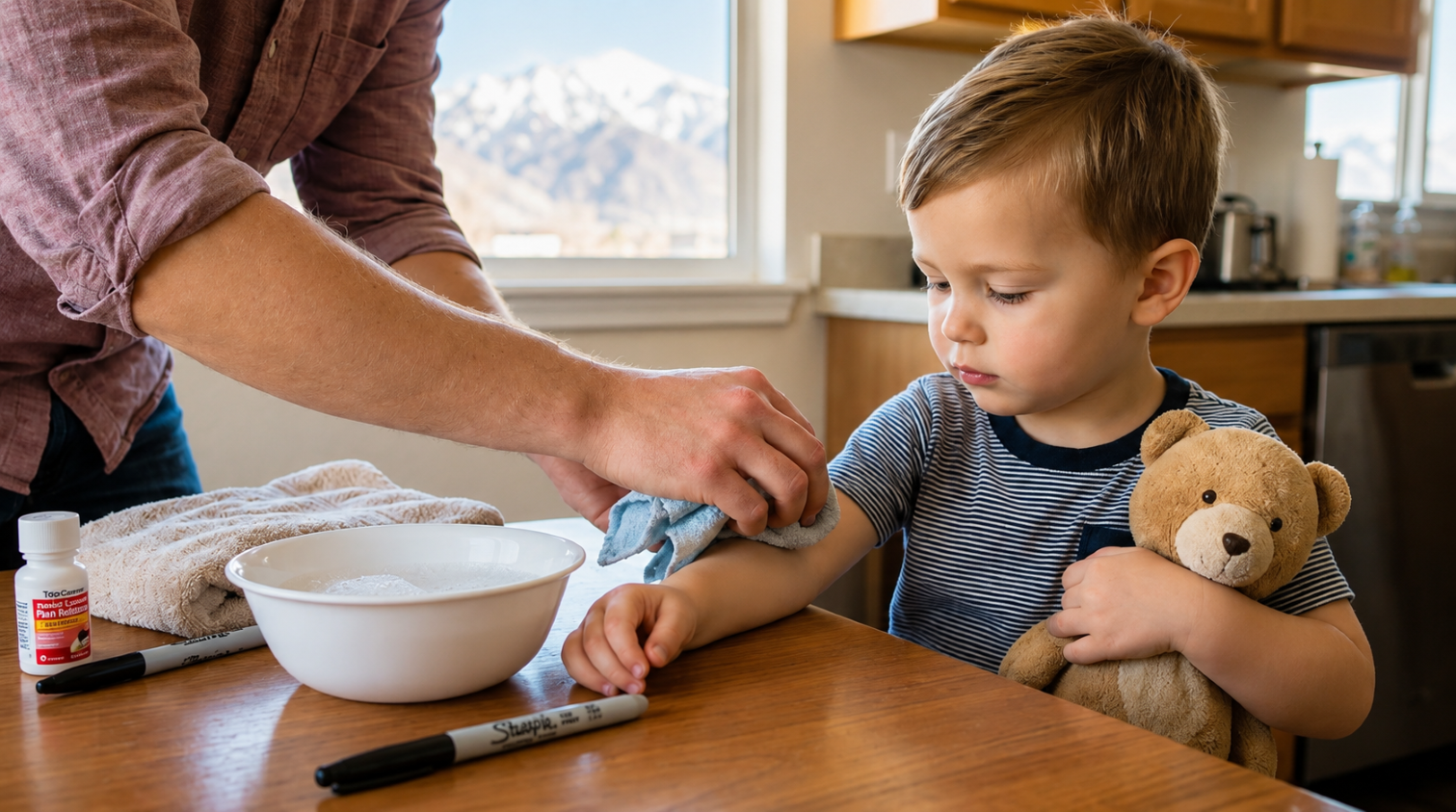
If you notice a bite and are worried about how it looks, conduct a “circle test”: draw a small circle around the reddened area using a marker. This makes it easy to see if the redness is spreading, which is a sign that you should contact our office for further instructions.
If the bite is small and your child is acting normally, you can manage the symptoms at home with these steps:
While most bites heal on their own, some do require the attention of a trained medical professional. Call our office right away if you are concerned about a bite or if your child is experiencing worrying symptoms.
Contact Utah Valley Pediatrics or seek emergency care if your child experiences “red flag” symptoms:
With just a few small changes to your daily routine, you can significantly reduce the risk of spider bites:
Education is a great way to empower your children without making them fearful:
How can I tell if a bump is a spider bite or just a regular bug bite?
It is often difficult to tell the difference between a spider bite and a bug bite by sight alone. Mosquito bites are typically puffy, red, and itchy. Spider bites are more likely to look like a small blister and are often painful rather than just itchy. Spiders usually bite only once, whereas mosquitoes may bite multiple times in a cluster.
I’ve heard rumors about hobo spiders being deadly. Is that true?
No, hobo spiders are not deadly. Current evidence from the CDC and local experts shows that hobo spiders are not of significant health concern and do not carry flesh-eating venom. They are non-aggressive and generally beneficial because they eat other pests.
Should my child take antibiotics for a spider bite?
Antibiotics do not treat spider venom. However, a doctor may prescribe them if the bite site becomes infected from scratching. If you see signs of infection—like pus, red streaks, or fever—call your pediatrician.
What is the “circle test” parents talk about?
The circle test involves drawing a small circle around the bite area with a pen. This allows you to easily see whether the redness or swelling spreads over the next few hours, which is a sign that you should contact a healthcare provider.
What should I do if I see the spider that bit my child?
If you find the spider that bit your child, carefully put it in a jar—even if it is dead—in case your child starts developing symptoms. This will help doctors properly identify it and give your child the most accurate care possible.
If you are ever worried about a bite or have questions about your child’s symptoms, please reach out to us at Utah Valley Pediatrics. We are here to provide the guidance and care needed to protect your child and your community.


 Medicines & Dosages
 Pay Your Bill
 Surveys & Questionnaires
 Pediatric Newsletter
 Patient Portal
 Locations