
Dr. Matthew Koller tries to focus on building good habits early because he understands how little adjustments for health when a child is young can have a big impact on their long-term health.
High-altitude living in Utah offers breathtaking views and endless outdoor adventures, but it also comes with a hidden challenge: significantly higher UV intensity. At Utah Valley Pediatrics, we want to ensure that your family enjoys the greatest snow on earth and our beautiful summer trails without the pain of a high-altitude burn. Because the atmosphere is thinner in our mountain communities, there is less of a filter to block harmful rays, making sun safety an essential part of your routine.
Many Utah parents ask why their children seem to burn even on cool, 60-degree days or during winter skiing. The answer lies in our elevation. As you climb higher, the atmosphere becomes thinner and less effective at absorbing and scattering ultraviolet (UV) radiation. In fact, for every 1,000 feet you gain in elevation, UV levels increase by approximately 8 to 10 percent. This means that in many of our mountain communities, the sun is 50 to 140 percent more intense than at sea level.
This intensity is further amplified by reflective surfaces like snow and water, which can nearly double your child’s exposure. It is also a common temperature trap to assume that a cool breeze protects the skin; sunburn is caused by radiation, not heat, so a severe burn can occur even when the air feels chilly.
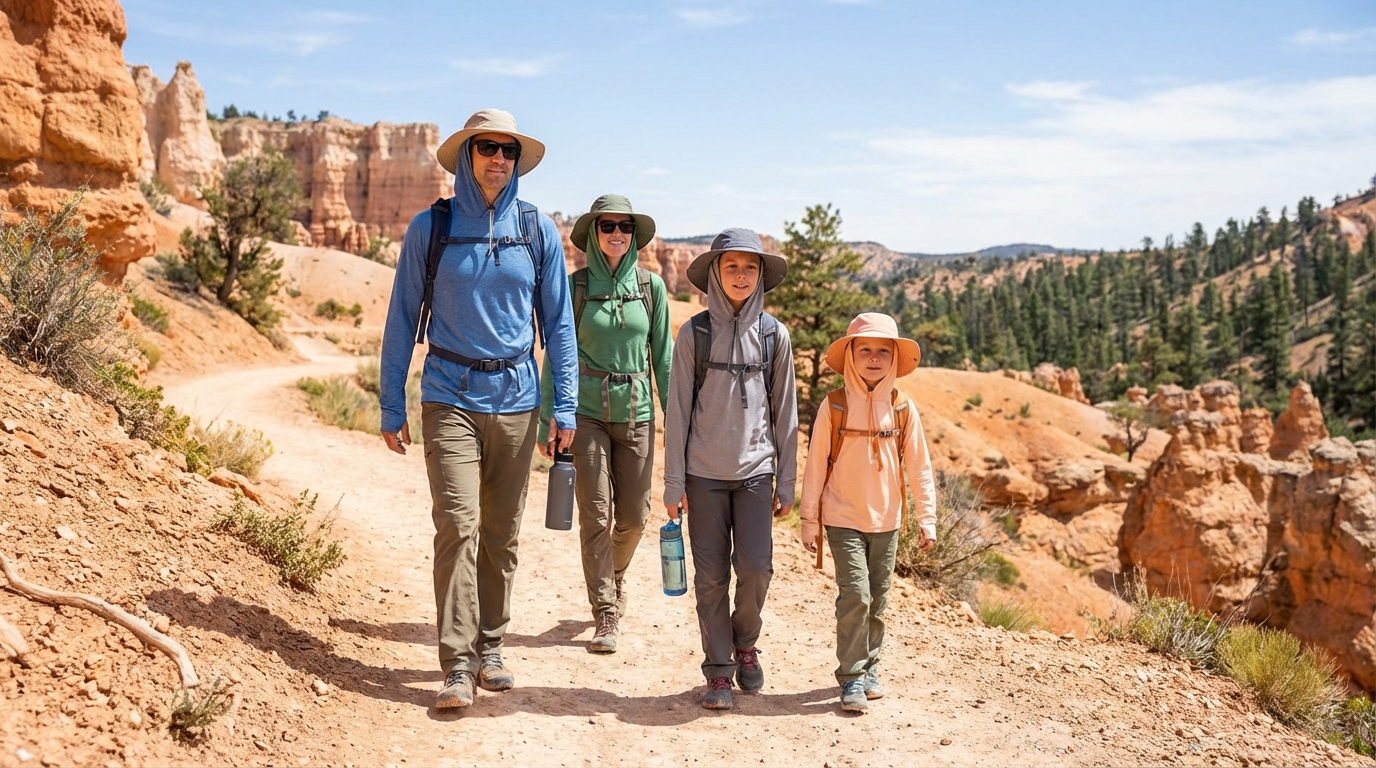
When protecting the littlest members of your family, the American Academy of Pediatrics recommends keeping infants under six months of age out of direct sunlight whenever possible. Your first line of defense should always be physical barriers rather than lotions. We recommend a layered approach to outdoor safety:
If shade and clothing are unavailable, you may apply a minimal amount of SPF 15 or higher sunscreen to small exposed areas like the face and the back of the hands for infants over six months.
Utah parents often debate which formula holds up best against the mountain sun. Mineral sunscreens use zinc oxide or titanium dioxide, allowing them to sit on the skin and physically block UV rays. Pediatricians typically prefer this option for children because it is not absorbed into the bloodstream and is effective immediately upon application.
Chemical sunscreens, on the other hand, use organic compounds that absorb UV radiation. The radiation converts to heat and is released from the skin. To be effective, these sunscreens need to be applied 15 to 30 minutes before going outside. Even then, some children with sensitive skin may find them irritating. For active kids, many parents find that zinc-based sticks stay in place better during sweating or snow sports and provide a visible shield so you can easily see when it is time to reapply.
When shopping for sun protection, always ensure that the label specifies broad-spectrum, confirming that the product protects against both UVA and UVB rays. While you might be tempted by very high SPF numbers, an SPF 30 blocks approximately 97% of UVB rays; higher ratings offer only marginal increases in protection and should never be used as an excuse to apply the product less frequently.
If your child is swimming or sweating, look for water-resistant formulas that maintain their rating for 40 to 80 minutes. For the face, stick sunscreens are often easier to apply around the T-zone—the eyes, nose, and mouth—without causing the stinging or running that often happens with lotions.
If prevention fails and your child develops a painful mountain sunburn, fast action can help manage the discomfort. Consider these recovery steps:
While gentle moisturizers or aloe gel can help, you should never break any blisters that form, as these act as a natural barrier during healing. Contact Utah Valley Pediatrics immediately if your child is under one year old and has a sunburn, or if a child of any age experiences severe blistering, fever, chills, or nausea.
Yes, they can. While most windshields are treated to block some UV rays, side and rear windows often are not. On long Utah road trips, the sun’s intensity is magnified by the altitude. We recommend using removable mesh window shields or UV window film to protect your child while in the car.
In Utah’s high-altitude environment, eye protection is as critical as skin protection. Because of our elevation, UV radiation is significantly more intense than at sea level, and these rays reflect off surfaces like water, sand, and especially snow. Snow can reflect up to 90% of UV radiation back toward a child’s eyes, increasing the risk of photokeratitis, or snow blindness—essentially a painful sunburn on the eye’s surface. Quality sunglasses with 100% UV protection are essential to prevent immediate discomfort and reduce long-term risks, such as cataracts.
Protection is also necessary on cloudy days, as up to 80% of UV rays penetrate through mist and haze. For the best defense, the American Academy of Ophthalmology recommends wrap-around styles to block rays from the sides, ideally paired with a wide-brimmed hat. Local experts emphasize that introducing sunglasses early helps children accept them as a standard part of their outdoor gear, ensuring that they stay protected during every Utah adventure.
You should avoid exposing babies six months and younger to direct sunlight, so think twice if your hike is likely to require long periods of time in the sun.
However, taking infants hiking at high elevations comes with other risks. Very young children under one year are more sensitive to altitude. If you are traveling above 8,000 feet, keep a close watch for signs of discomfort. Because toddlers may not be able to describe altitude sickness, look for non-specific signs like excessive crying, irritability, or a sudden refusal to eat. If your child becomes unwell, the best treatment is to begin a safe descent immediately.
Most sun damage actually occurs during everyday activities. Because Utah’s UV index can be very high even in residential neighborhoods, it is important to apply sunscreen 15 to 30 minutes before your child goes out to play and reapply every two hours. If they are playing in a sprinkler or a kiddie pool, reapplication should happen even more frequently—typically every 30 to 80 minutes.
Because UV rays reflect off the ground, snow, and water in Utah, children can burn in unexpected places. Be sure to apply protection under the chin, inside the nostrils, on the tips of the ears, and even on the tops of the feet if they are wearing sandals.
Dealing with a sunburn is never easy, especially for children who cannot fully understand the cause of their discomfort. If you are concerned about your child’s symptoms or would like more personalized guidance on protecting their skin at our unique Utah elevations, the team at Utah Valley Pediatrics is here to help. Contact our offices today to schedule an appointment or to speak with a provider about your child’s sun safety needs.



 Medicines & Dosages
 Pay Your Bill
 Surveys & Questionnaires
 Pediatric Newsletter
 Patient Portal
 Locations