A proper fit is achieved when the helmet sits level on the head and remains stable during a yawn.
Different sports require specific helmet shapes to protect against unique fall patterns.
MIPS technology provides an extra layer of safety by absorbing rotational forces during impact.
Utah law mandates DOT-approved helmets and safety courses for minors operating off-road vehicles.
Helmets lose their effectiveness after a single crash or five years of general use.
Pediatricians advise waiting until a child is one year old before they ride in bike trailers.
As the snow melts and the sun returns to our beautiful Utah valleys, our neighborhoods come alive with children on wheels. Whether your child is just starting out on a balance bike, zipping down the sidewalk on a scooter, or exploring mountain trails on an ATV, this wheel season is a highlight of a Utah childhood. At Utah Valley Pediatrics, we want to ensure that those memories are filled with fun rather than trips to the clinic.
While a scraped knee is often a badge of childhood courage, protecting the head and body with the right gear is essential. Modern safety equipment is designed to absorb the force of an impact, turning what could have been a serious accident into a minor tumble.
Here is the ultimate guide to helmet safety for kids, answering the most common questions from Utah parents.
How Can I Make Sure My Child’s Bike Helmet Actually Fits?
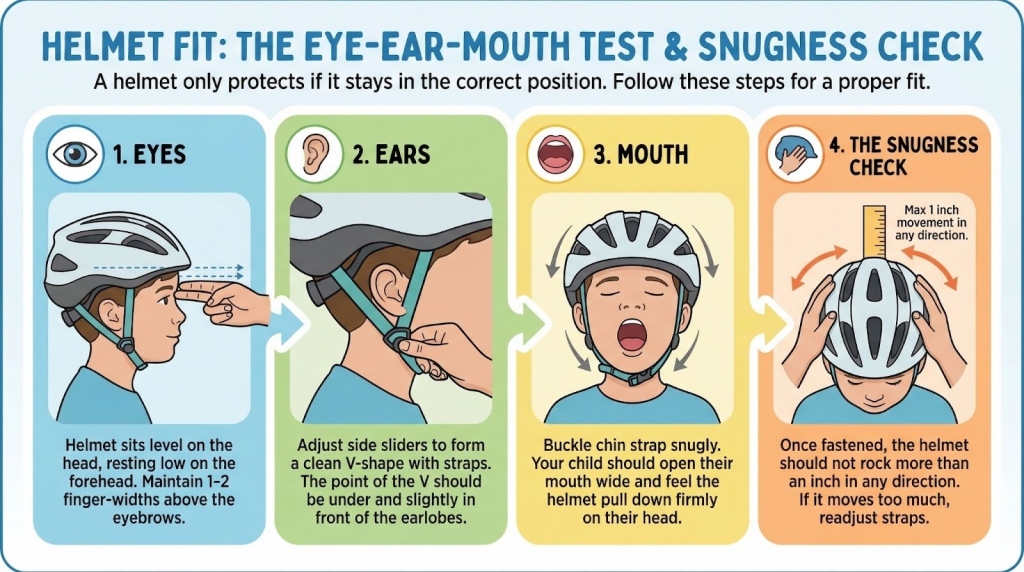
A helmet only protects your child if it stays in the correct position during a fall. You can ensure a proper fit by following the simple eye-ear-mouth test:
Eyes: The helmet should be level on the head and rest about one or two finger-widths above the eyebrows.
Ears: Adjust the side sliders so the straps form a clean V shape sitting just under and slightly in front of the earlobes.
Mouth: Buckle the chin strap snugly; your child should be able to open their mouth wide for a big yawn and feel the helmet pull down firmly on their head.
The Snugness Check: Once fastened, the helmet should not rock more than an inch in any direction.
Does My Child Need a Different Helmet for a Scooter or Skateboard?
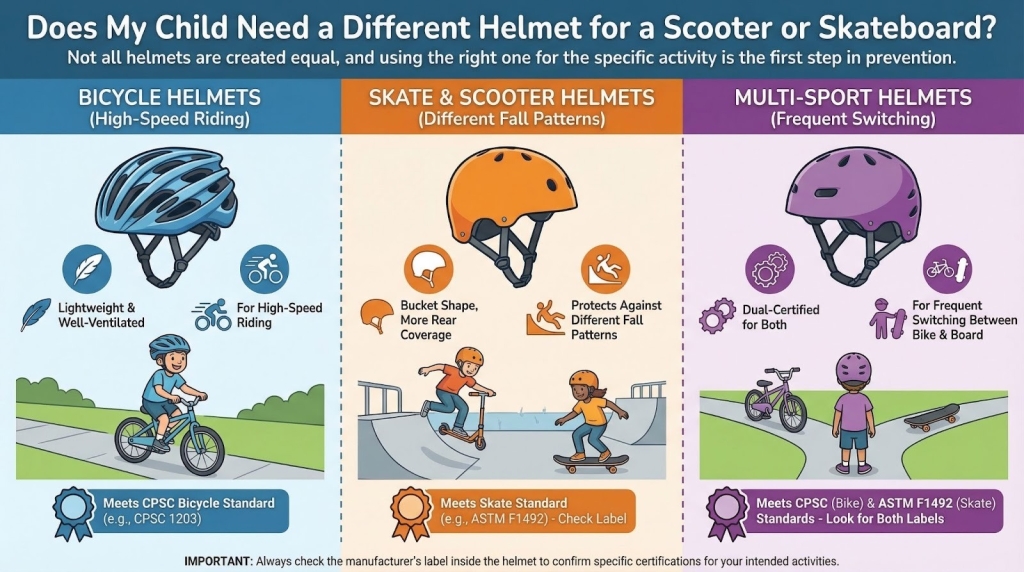
Not all helmets are created equal, and using the right one for the specific activity is the first step in prevention.
Bicycle Helmets: These are typically lightweight and well-ventilated for high-speed riding.
Skate and Scooter Helmets: These often feature a bucket shape that provides more coverage for the back of the head, helping protect against the various fall patterns common in those sports.
Multi-Sport Helmets: If your child frequently switches between a bike and a skateboard, look for a dual-certified helmet that meets safety standards for both activities.
Activity
Recommended Helmet Type
Key Features
Bicycling
Bicycle Helmet
Lightweight, highly ventilated, designed for forward falls.
Skate/Scooter
Skate Helmet
“Bucket” shape; provides more coverage for the back of the head.
Multi-Sport
Dual-Certified
Meets both CPSC (bike) and ASTM (skate) safety standards.
Is MIPS Worth the Extra Cost?
Many parents are noticing the MIPS (Multi-directional Impact Protection System) yellow sticker on helmets in Utah sporting goods stores. This technology uses a sliding layer inside the helmet to help absorb the “twisting” motion that happens when a head hits the ground at an angle.
Is MIPS worth it? While all CPSC-certified helmets protect against direct hits, MIPS is a smart investment for kids riding on Utah’s paved roads or mountain trails, where angled falls are more common.
My Child Is Moving to an E-bike. Do They Need a Special Helmet?
With the surge in e-bikes and high-speed electric scooters in cities like Provo and Orem, safety requirements are changing. Because these wheels go much faster than traditional bikes, the risk of a high-speed impact is greater.
Many parents are opting for full-face helmets to protect the jaw and face, or specialized helmets designed to handle higher-speed impacts.
What Are the Utah Laws for Kids on ATVs and Off-Road Vehicles?
For families who enjoy Utah’s backcountry on all-terrain vehicles (ATVs), safety requirements are more stringent.
Mandatory Helmets: In Utah, any rider under the age of 18 is legally required to wear a helmet on public lands.
DOT Standards: Bicycle helmets are not sufficient for motorized speeds; ATV helmets must be Department of Transportation (DOT) approved.
Required Training: All OHV operators in Utah are now required to complete a free education course.
Is It Safe to Use a Hand-Me-Down Helmet?
While it is tempting to use an older sibling’s gear, safety gear does not last forever.
The One-Crash Rule: Bicycle helmets are designed to handle a single serious impact; if your child has a hard fall, the helmet must be replaced.
Expiration Dates: Materials can become brittle over time; replace helmets every five years or according to the manufacturer’s timeline.
The Driveway Drop: Even dropping a helmet on a concrete driveway can cause small, invisible cracks in the internal foam. To be safe, treat the helmet as a one-time-use life-saving device.
Is It Okay to Take My Baby on Bike Rides in a Trailer?
Parents of infants are often eager to get back on the trails, but experts suggest caution. Most pediatricians recommend waiting until a child is at least one year old before they ride as a passenger in a bike trailer or seat. Younger babies often have neck structures that are not yet strong enough to support the weight of a helmet or handle the jolts of a ride.
How Do I Get My Tween to Keep Their Helmet On?
This is a common struggle as kids reach middle school and start to prioritize fitting in.
Lead by Example: Children are significantly more likely to wear a helmet if they see their parents wearing one.
Let Them Choose: Involving your child in picking a helmet they actually like makes them much more likely to wear it consistently.
Firm Boundaries: Many Utah families find success with a “No Helmet, No Bike” policy, treating it as a non-negotiable safety standard like a seatbelt.
What Other Safety Gear Should My Child Wear?
Protecting the rest of the body helps prevent fractures and painful skin abrasions.
Proper Footwear: Always opt for sturdy, closed-toe shoes; avoid sandals or flip-flops that can slip.
High Visibility: Dress children in bright colors so they are easily seen by motorists.
Pads and Guards: For scooters and skateboards, wrist guards, knee pads, and elbow pads are highly recommended.
By taking these steps, you are giving your children the freedom to explore Utah’s outdoors with confidence. If you have questions about specific safety concerns or your child has experienced a fall, our team at Utah Valley Pediatrics is always here to help.




 Medicines & Dosages
 Pay Your Bill
 Surveys & Questionnaires
 Pediatric Newsletter
 Patient Portal
 Locations