
Dr. Mitton has always loved working with children, especially newborns and toddlers. His philosophy is to meet families where they are, listen closely to parents’ insights, and provide both medical guidance and emotional support.
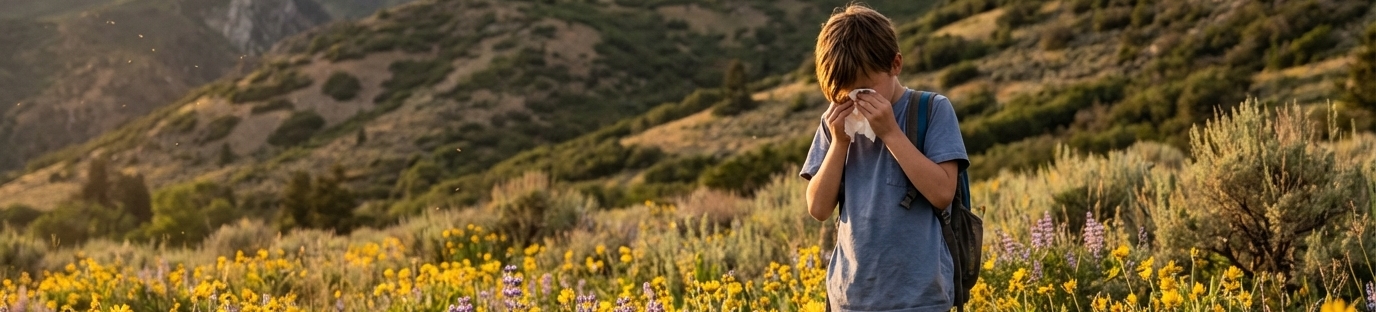
If you feel like your child’s “spring” allergies start while there is still a chill in the air and snow on the mountains, you aren’t imagining it. In Utah, our unique geography and semi-arid climate create a prolonged allergy season that can last from February through the first hard frost in late October.
At Utah Valley Pediatrics, we see many parents who are surprised to find that their child’s itchy eyes or persistent sneezing are due to pollen counts rising as early as late winter. Understanding the Utah pollen calendar is the first step in helping your child stay comfortable and active outdoors.
In many parts of the country, allergy season doesn’t begin until April. However, in Utah Valley, tree pollination begins significantly earlier. Because Utah is so dry, these pollen grains stay airborne longer than they would in more humid climates. High winds coming off the canyons only exacerbate the problem by carrying pollen for miles.
According to the American Academy of Allergy, Asthma & Immunology (AAAAI), wind-pollinated plants are the most common triggers for seasonal allergic rhinitis, which affects millions of children annually. In our region, the sheer variety of trees contributes to a “staggered” season where one species finishes just as another begins.
Common trees in Utah that cause allergies include the following:
If your child has pollen-food allergy syndrome, you might even notice they have an itchy mouth when eating certain fruits (like apples or cherries) during birch or alder season. This is because the proteins in the fruit are structurally similar to the pollen.
As tree pollen levels finally begin to dip in May, grass pollen takes center stage. This season typically peaks in June and July. Many Utah families enjoy our beautiful parks and trails during these months, but for a child with a grass allergy, even a backyard barbecue can be a trigger. Common grasses in our area include Orchard grass, Timothy grass, and Kentucky Bluegrass.
If your child breaks out in hives after rolling in the grass or starts sneezing specifically after the lawn is mowed, they are likely reacting to these summer triggers. Clinical research from the American Academy of Pediatrics (AAP) suggests that pediatric allergies can often be mistaken for summer colds, but the “itch” is the defining factor.
Just when you think the worst is over, the late summer weeds begin to pollinate. From August through October, weed pollen is the primary concern for Utah parents.

It is impossible to discuss Utah allergies without mentioning our air quality. During our winter and summer inversions, particulate matter can become trapped in the valley. While pollution itself is not an allergen, the Environmental Protection Agency (EPA) notes that poor air quality can act as an irritant that exacerbates existing allergy symptoms.
When the Air Quality Index (AQI) is high, your child’s nasal passages may become more inflamed, making them even more sensitive to the pollen in the air. This “double hit” of environmental stressors is a common reason why Utah children may experience more severe symptoms than children in other states.
To manage allergies effectively, you need real-time data. For many years, pollen counts were only updated once every 24 hours, often reflecting yesterday’s air. Today, Utah parents have access to much better tools:
While many allergy symptoms can be managed at home, it is important to know when a professional evaluation is necessary. If your child’s symptoms are interfering with their sleep, school performance, or participation in sports, it may be time to discuss a long-term management plan.
Persistent, untreated allergies can sometimes lead to secondary issues such as sinusitis or ear infections. At Utah Valley Pediatrics, we can help determine if your child’s symptoms are purely seasonal or if there are underlying triggers, such as pet dander or dust mites, that need to be addressed year-round.
We are here to help your family navigate the beautiful—but often pollen-heavy—Utah landscape. By understanding the local calendar and preparing early, you can ensure that your child spends less time reaching for tissues and more time enjoying the great outdoors.
If your child is experiencing bad symptoms, schedule an appointment with one of our Utah Pediatricians. We have decades of experience treating Utah allergies. With offices throughout Utah County, coming in for a visit has never been easier!



 Medicines & Dosages
 Pay Your Bill
 Surveys & Questionnaires
 Pediatric Newsletter
 Patient Portal
 Locations